Changelog 2024 10 21
Opik Dashboard:
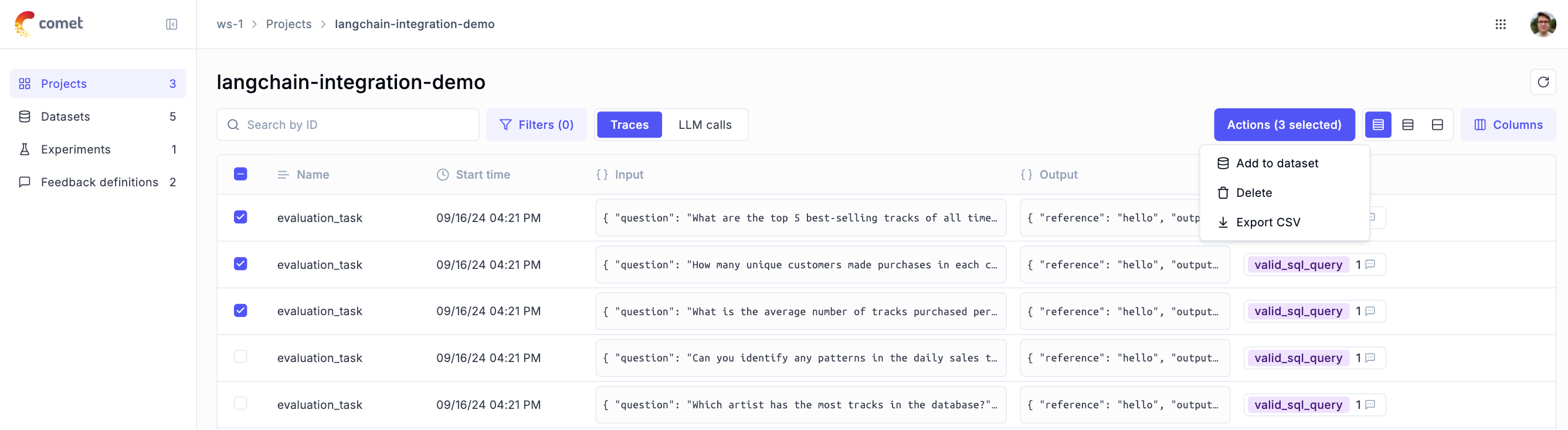
- Added the option to download traces and LLM calls as CSV files from the UI:
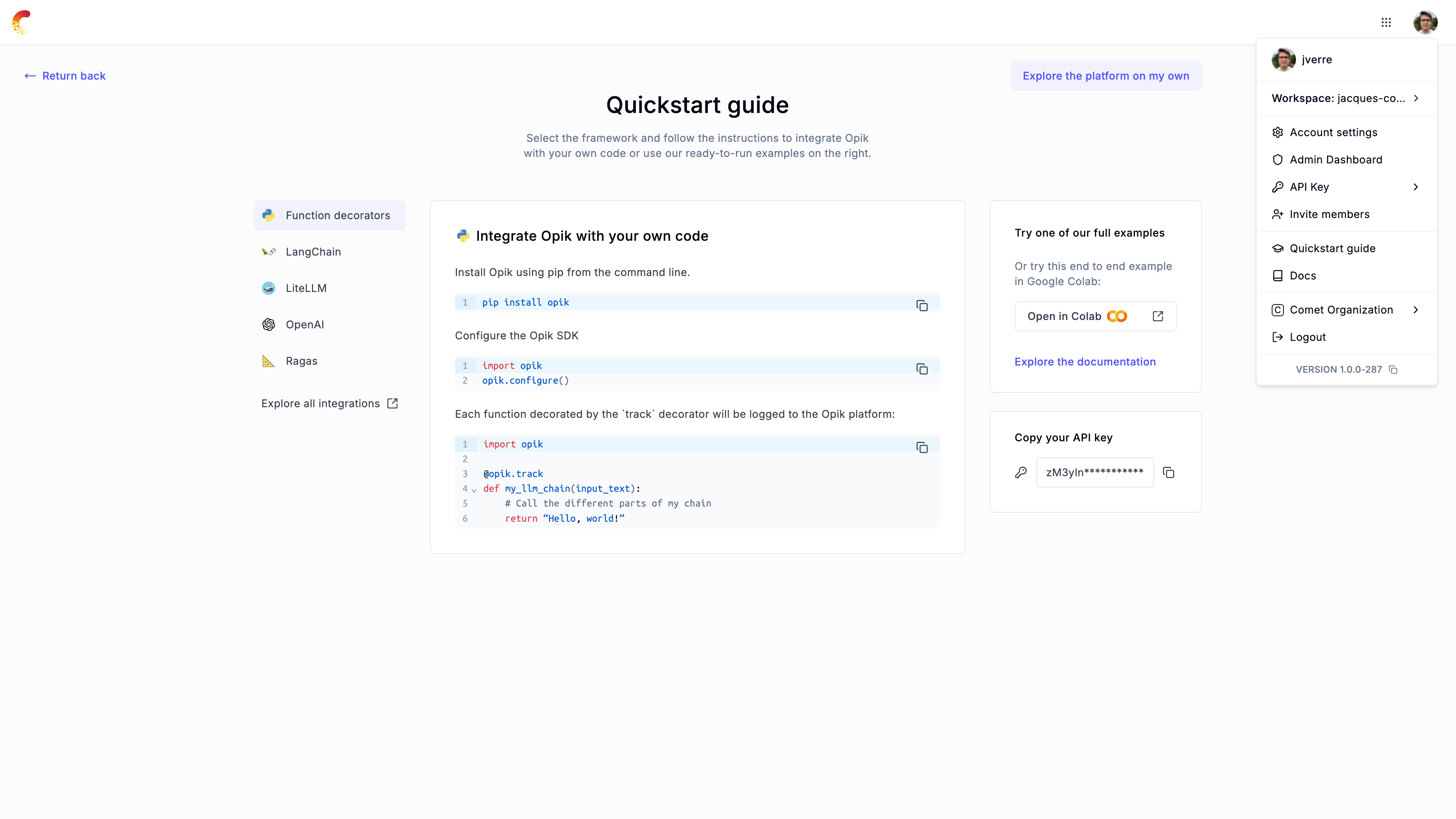
- Introduce a new quickstart guide to help you get started:
- Updated datasets to support more flexible data schema, you can now insert items with any key value pairs and not just
inputandexpected_output. See more in the SDK section below. - Multiple small UX improvements (more informative empty state for projects, updated icons, feedback tab in the experiment page, etc).
- Fix issue with
\tcharacters breaking the YAML code block in the traces page.
SDK:
-
Datasets now support more flexible data schema, we now support inserting items with any key value pairs:
wordWrap import opik client = opik.Opik() dataset = client.get_or_create_dataset(name="Demo Dataset") dataset.insert([ { "user_question": "Hello, what can you do ?", "expected_output": { "assistant_answer": "I am a chatbot assistant that can answer questions and help you with your queries!" } }, { "user_question": "What is the capital of France?", "expected_output": { "assistant_answer": "Paris" } }, ]) -
Released WatsonX, Gemini and Groq integration based on the LiteLLM integration.
-
The
contextfield is now optional in the Hallucination metric. -
LLM as a Judge metrics now support customizing the LLM provider by specifying the
modelparameter. See more in the Customizing LLM as a Judge metrics section. -
Fixed an issue when updating feedback scores using the
update_current_spanandupdate_current_tracemethods. See this Github issue for more details.