
Cost tracking
Opik has been designed to track and monitor costs for your LLM applications by measuring token usage across all traces. Using the Opik dashboard, you can analyze spending patterns and quickly identify cost anomalies. All costs across Opik are estimated and displayed in USD.
Monitoring Costs in the Dashboard
Section titled “Monitoring Costs in the Dashboard”You can use the Opik dashboard to review costs at three levels: spans, traces, and projects. Each level provides different insights into your application's cost structure.
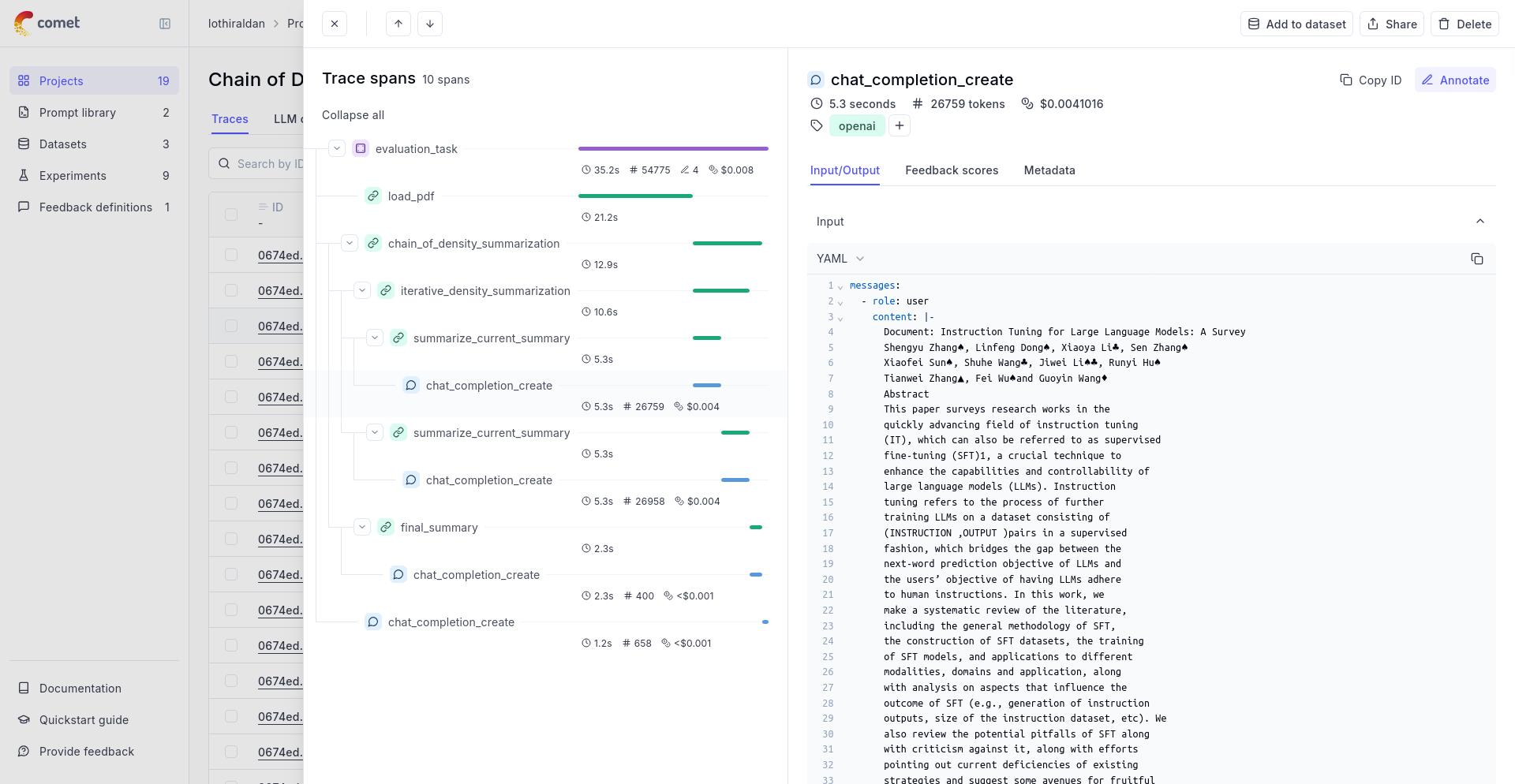
Span-Level Costs
Section titled “Span-Level Costs”Individual spans show the computed costs (in USD) for each LLM spans of your traces:
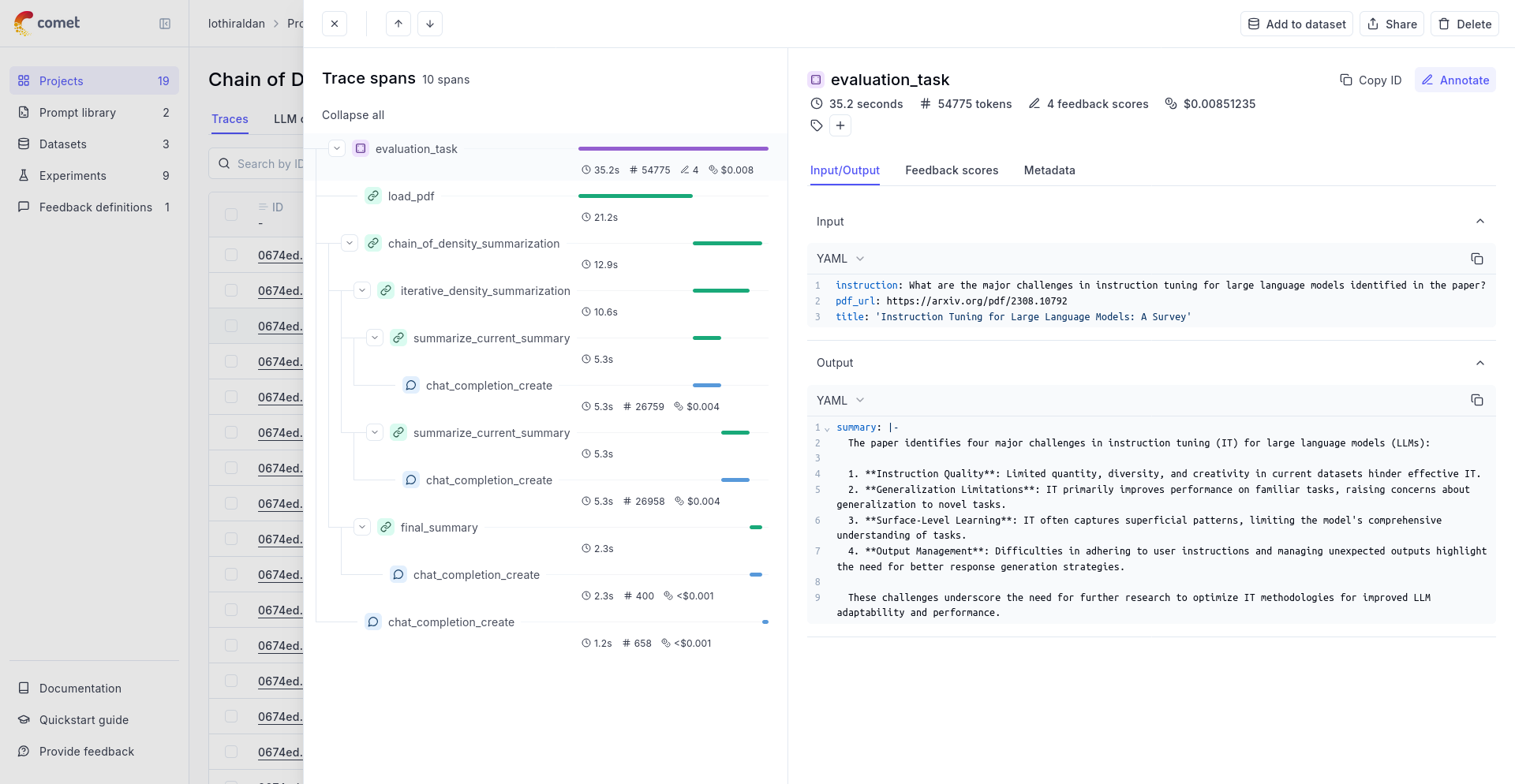
Trace-Level Costs
Section titled “Trace-Level Costs”If you are using one of Opik's integrations, we automatically aggregates costs from all spans within a trace to compute total trace costs:
Project-Level Analytics
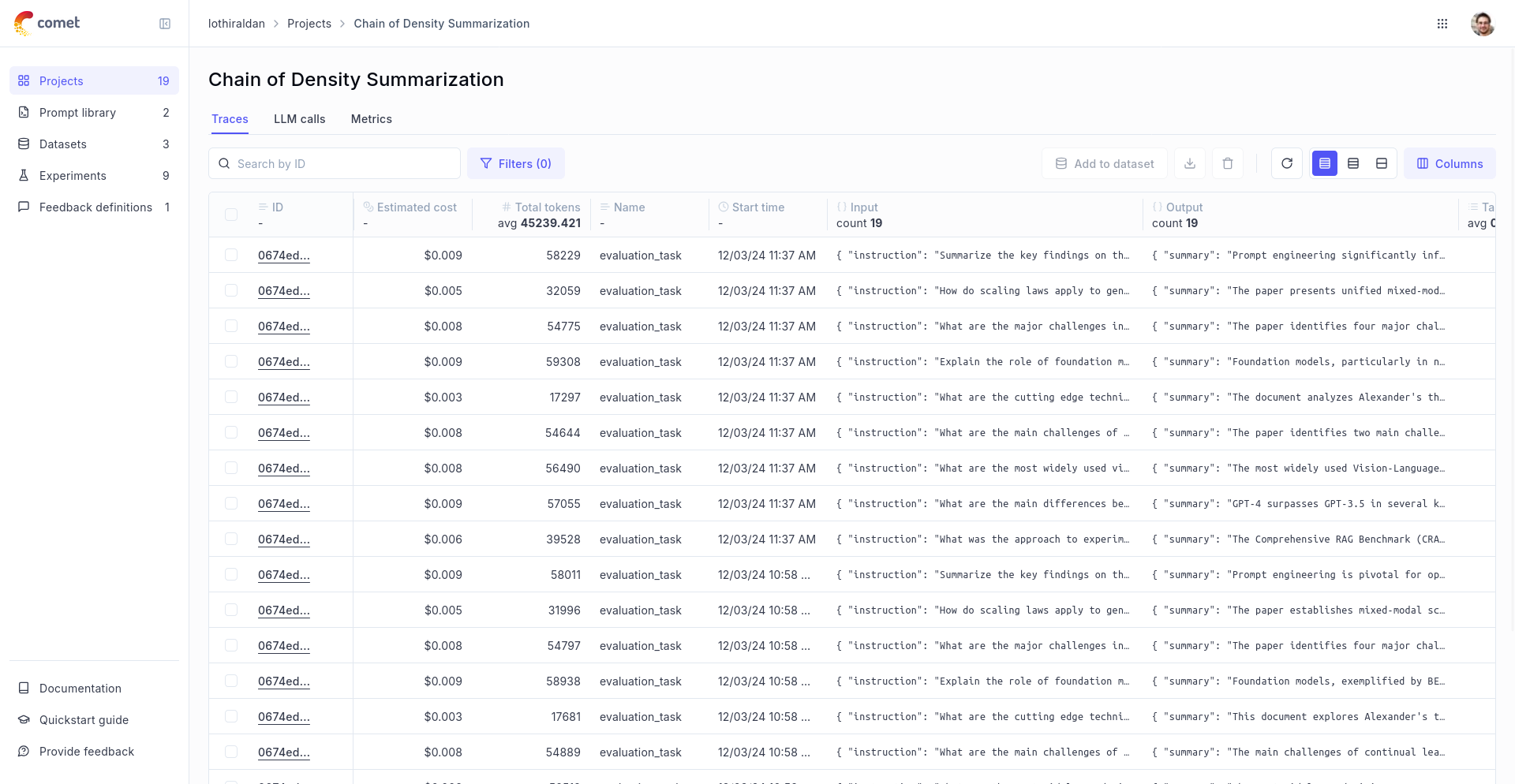
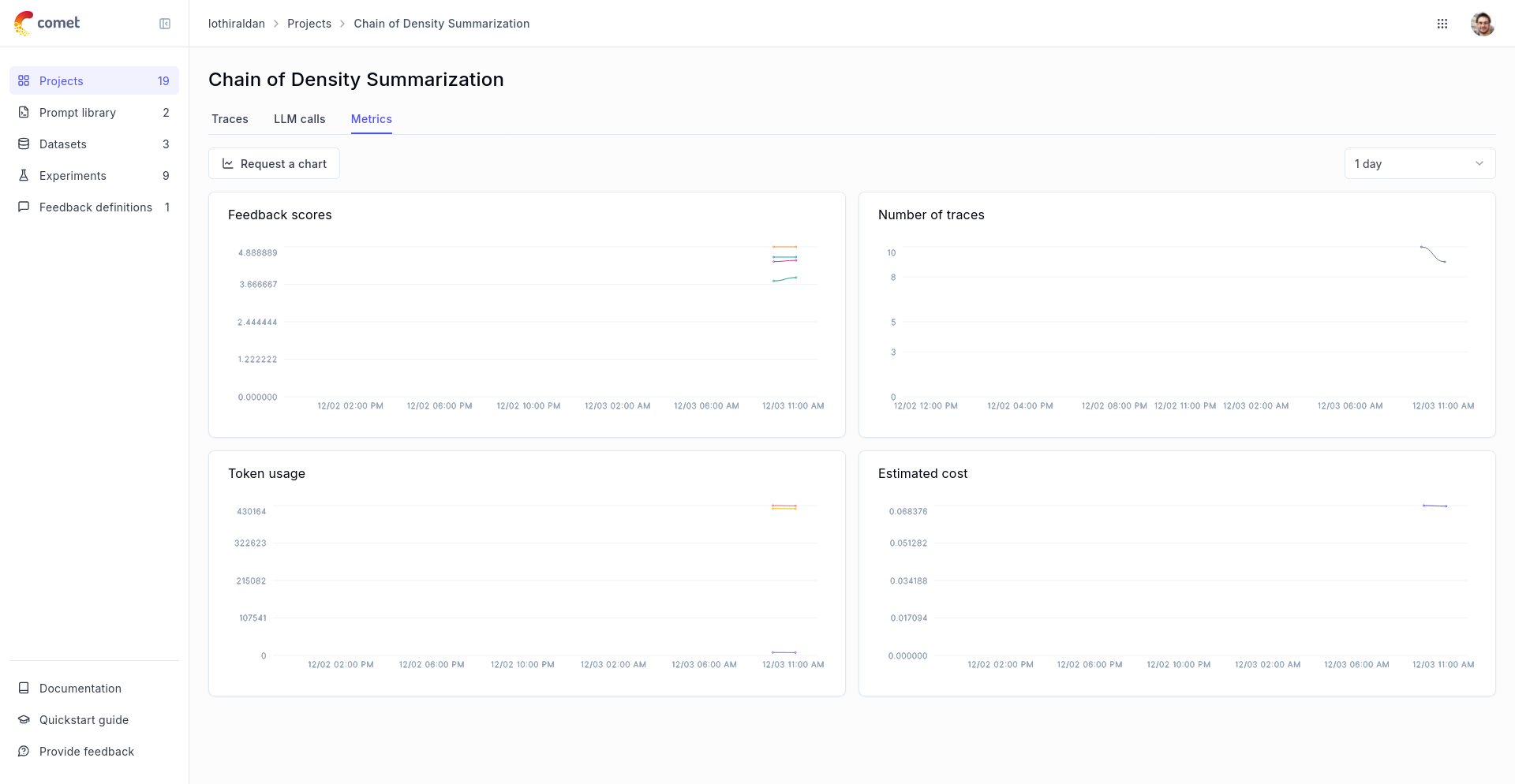
Section titled “Project-Level Analytics”Track your overall project costs in:
- The main project view, through the Estimated Cost column:
- The project Metrics tab, which shows cost trends over time:
Retrieving Costs Programmatically
Section titled “Retrieving Costs Programmatically”You can retrieve the estimated cost programmatically for both spans and traces. Note that the cost will be None if the span or trace used an unsupported model.
Retrieving Span Costs
Section titled “Retrieving Span Costs”import opik
client = opik.Opik()
span = client.get_span_content("<SPAN_ID>")
# Returns estimated cost in USD, or None for unsupported models
print(span.total_estimated_cost)Retrieving Trace Costs
Section titled “Retrieving Trace Costs”import opik
client = opik.Opik()
trace = client.get_trace_content("<TRACE_ID>")
# Returns estimated cost in USD, or None for unsupported models
print(trace.total_estimated_cost)Manually setting the provider and model name
Section titled “Manually setting the provider and model name”If you are not using one of Opik's integration, Opik can still compute the cost. For you will need to ensure the
span type is llm and you will need to pass:
provider: The name of the provider, typicallyopenai,anthropicorgoogle_aifor example (the most recent providers list can be found inopik.LLMProviderenum object)model: The name of the modelusage: The input, output and total tokens for this LLM call.
You can then update your code to log traces and spans:
If you are using function decorators, you will need to use the update_current_span method:
from opik import track, opik_context

@track(type="llm") # Note - Specifying the type is this is important
def llm_call(input):
  opik_context.update_current_span(
    provider="openai",
    model="gpt-3.5-turbo",
    usage={
      "prompt_tokens": 4,
      "completion_tokens": 6,
      "total_tokens": 10
    }
  )
  return "Hello, world!"

llm_call("Hello world!")
When using the low level Python SDK, you will need to update the client.span or trace.span methods:
import opik

client = opik.Opik()

trace = client.trace(
  name="custom_trace",
  input={"text": "Hello world!"},
)

# Logging the LLM call
span = trace.span(
  name="llm_call",
  type="llm",
  input={"text": "Hello world!"},
  output={"response": "Hello world!"},
  provider="openai",
  model="gpt-3.5-turbo",
  usage={
    "prompt_tokens": 4,
    "completion_tokens": 6,
    "total_tokens": 10
  }
)
Manually Setting Span Costs
Section titled “Manually Setting Span Costs”When you need to set a custom cost or use an unsupported model, you can manually set the cost of a span. There are two approaches depending on your use case:
Setting Costs During Span Creation
Section titled “Setting Costs During Span Creation”If you're manually creating spans, you can set the cost directly when creating the span:
from opik import track, opik_context

@track
def llm_call(input):
  opik_context.update_current_span(
    total_cost=0.05,
  )
  return "Hello, world!"

llm_call("Hello world!")
Updating Costs After Span Completion
Section titled “Updating Costs After Span Completion”With Opik integrations, spans are automatically created and closed, preventing updates while they're open. However, you can update the cost afterward using the update_span method. This works well for implementing periodic cost estimation jobs:
from opik import Opik
from opik.rest_api.types.span_public import SpanPublic

# Define your own cost mapping for different models
TOKEN_COST = {
    ("openai.chat", "gpt-4o-2024-08-06"): {
        "input_tokens": 2.5e-06,
        "output_tokens": 1e-05,
    }
}

# This part would be custom for your use-case and is only here for example
def compute_cost_for_span(span: SpanPublic):
    provider = span.provider or span.input.get("ai.model.provider")
    model = span.model or span.output.get("gen_ai.response.model")
    usage = span.usage

    if (provider, model) in TOKEN_COST:
        model_cost = TOKEN_COST[(provider, model)]
        cost = (
            usage["input_tokens"] * model_cost["input_tokens"]
            + usage["output_tokens"] * model_cost["output_tokens"]
        )
        return cost
    return None

def update_span_costs(project_name, trace_id=None):
    opik_client = Opik()

    # Find LLM spans that don't have estimated costs
    spans = opik_client.search_spans(
        project_name=project_name,
        trace_id=trace_id,
        filter_string='type="llm" and total_estimated_cost=0',
    )

    for span in spans:
        cost = compute_cost_for_span(span)

        if cost:
            print(f"Updating span {span.id} of trace {span.trace_id} with cost: {cost}")
            opik_client.update_span(
                trace_id=span.trace_id,
                parent_span_id=span.parent_span_id,
                project_name=project_name,
                id=span.id,
                total_cost=cost,
            )

# Example usage in a CRON job
if __name__ == "__main__":
    update_span_costs("your-project-name")
This approach is particularly useful when:
- Using models or providers not yet supported by automatic cost tracking
- You have a custom pricing agreement with your provider
- You want to track additional costs beyond model usage
- You need to implement cost estimation as a background process
- Working with integrations where spans are automatically managed
Supported Models, Providers, and Integrations
Section titled “Supported Models, Providers, and Integrations”Opik currently calculates costs automatically for all LLM calls in the following Python SDK integrations:
- Google ADK Integration
- AWS Bedrock Integration
- LangChain Integration
- OpenAI Integration
- LiteLLM Integration
- Anthropic Integration
- CrewAI Integration
- Google AI Integration
- Haystack Integration
- LlamaIndex Integration
Supported Providers
Section titled “Supported Providers”Cost tracking is supported for the following LLM providers (pass the name in parentheses as the span provider; the most common ones are also available in the opik.LLMProvider enum):
- OpenAI (
openai) - Models hosted by OpenAI (https://platform.openai.com) - Anthropic (
anthropic) - Models hosted by Anthropic (https://www.anthropic.com) - Anthropic on Vertex AI (
anthropic_vertexai) - Anthropic models hosted by Google Vertex AI - Google AI (
google_ai) - Gemini models hosted in Google AI Studio (https://ai.google.dev/aistudio) - Google Vertex AI (
google_vertexai) - Gemini models hosted in Google Vertex AI (https://cloud.google.com/vertex-ai) - AWS Bedrock (
bedrock) - Models hosted by AWS Bedrock (https://aws.amazon.com/bedrock) - Groq (
groq) - Models hosted by Groq (https://groq.com) - TypeSafe AI (
typesafe) - Jev System One models hosted by TypeSafe AI (https://typesafe.ai)
You can find a complete list of supported models for these providers in the model_prices_and_context_window.json file.